
Scleral Lenses: Who Actually Needs Them and What You Should Expect
Scleral lenses are large-diameter, rigid gas permeable contact lenses that vault over the cornea and rest on the whites of the eyes, making them the preferred option for people with irregular corneas or severe dry eye. Understanding why someone would need a scleral lens comes down to whether standard lenses or glasses fail to correct vision adequately or cause too much discomfort.
Key Takeaways
Scleral lenses are not standard contacts; they are a medical-grade solution for eyes that other correction methods can't address effectively.
Keratoconus, severe dry eye, post-surgical irregularities, and corneal scarring are the most common reasons people switch to sclerals.
The fluid reservoir between the lens and the cornea is a core feature, not a side benefit; it's what makes them work for both vision correction and surface healing.
Costs typically range from $1,500 to $4,000 per pair, and insurance coverage varies significantly by plan and diagnosis.
The fitting process requires a specialist and can take multiple appointments, but patient satisfaction rates are high once the right fit is achieved.
With proper care, scleral lenses last one to two years and most people adapt to insertion and removal within a few weeks.
What Scleral Lenses Actually Are (And How They Work)
A scleral lens looks nothing like the soft, thin discs most people picture when they think of contacts. These lenses measure between 14.5mm and 24mm in diameter, which is significantly larger than a standard soft lens (typically 14mm to 16mm). That extra size is the whole point.
Because of their diameter, scleral lenses completely vault over the cornea. They bridge across the entire corneal surface and land on the sclera, the firm white tissue surrounding the eye. The space created between the back of the lens and the front of the cornea fills with preservative-free saline solution, forming a liquid reservoir that keeps the corneal surface continuously hydrated throughout wear.
The lens itself is made from rigid gas permeable (RGP) material, which allows oxygen to pass through to the cornea. This was a historical limitation of earlier hard lenses, but modern RGP materials have largely eliminated that concern for most wearers.
The vaulting mechanism and fluid chamber are what separate sclerals from every other lens type. They don't touch the cornea at all during normal wear. That's the feature that makes them therapeutic for damaged or irregular corneal surfaces, not just a corrective tool.

Conditions That Make Scleral Lenses Medically Necessary
This is the core of why someone would need a scleral lens. The conditions below are the ones that most consistently push patients away from standard corrective options and toward sclerals.
Keratoconus and Other Corneal Ectasia Conditions
Keratoconus causes the cornea to progressively thin and bulge outward into a cone shape. That irregular surface means light doesn't refract consistently, and glasses or soft contact lenses can't neutralize the distortion. Scleral lenses vault over the cone entirely, using the fluid layer as an optical corrector.
Clinical data supports this strongly. Research has shown visual gains from a baseline logMAR of 0.50-0.53 down to post-treatment logMAR of 0.08-0.09 in keratoconus patients fitted with sclerals. That's a dramatic improvement in measurable visual acuity. Pellucid marginal degeneration and post-LASIK ectasia respond similarly.
Severe Dry Eye Disease
Severe dry eye is more than discomfort. For patients with aqueous-deficient or evaporative dry eye, wearing any contact lens can feel impossible. Scleral lenses change the equation because the saline reservoir sits between the lens and the eye constantly, acting as a synthetic tear film that doesn't evaporate.
In clinical studies of symptomatic soft lens wearers who switched to sclerals, 45% of participants reported wanting to continue scleral lens wear after just one month, citing significant symptom improvement.
Stevens-Johnson Syndrome and Graft vs. Host Disease
Both conditions can cause severe conjunctival scarring, lid abnormalities, and chronic ocular surface inflammation. The corneal surface in these patients is fragile, often producing almost no natural tears. The scleral lens protects the surface, delivers continuous hydration, and in some cases is the only way these patients can maintain functional vision without surgery.
Post-Surgical Complications
After LASIK, PRK, radial keratotomy, or corneal transplants, some patients develop irregular astigmatism that neither glasses nor soft lenses can correct. The corneal surface has been altered in ways that are no longer spherical or predictably curved. Scleral lenses neutralize that irregularity through the liquid-filled chamber.
Corneal Scarring and Trauma
Scarring from chemical burns, infections like acanthamoeba keratitis, or physical trauma to the eye creates irregular elevations and depressions in the corneal surface. A scleral lens effectively smooths over those irregularities optically while also protecting the damaged tissue.

Advantages That Set Scleral Lenses Apart From Other Options
The advantages are meaningful for the right patient. Vision correction through sclerals can address irregularities that are impossible to fix with any other non-surgical method. The lens doesn't shift on the eye because it rests on the stable sclera, not the curved cornea, so vision stays consistent throughout the day.
For patients with extreme sensitivity, the fact that the lens never contacts the cornea is not a minor perk. It's the difference between being able to function at work and not being able to open their eyes comfortably.
There is also a surgical avoidance factor. Many patients who would otherwise need a corneal transplant find that scleral lenses manage their condition well enough to delay or avoid surgery entirely. That's a significant quality-of-life and financial consideration.
Drawbacks and Practical Challenges to Anticipate
No lens type is without trade-offs, and sclerals have a genuine learning curve.
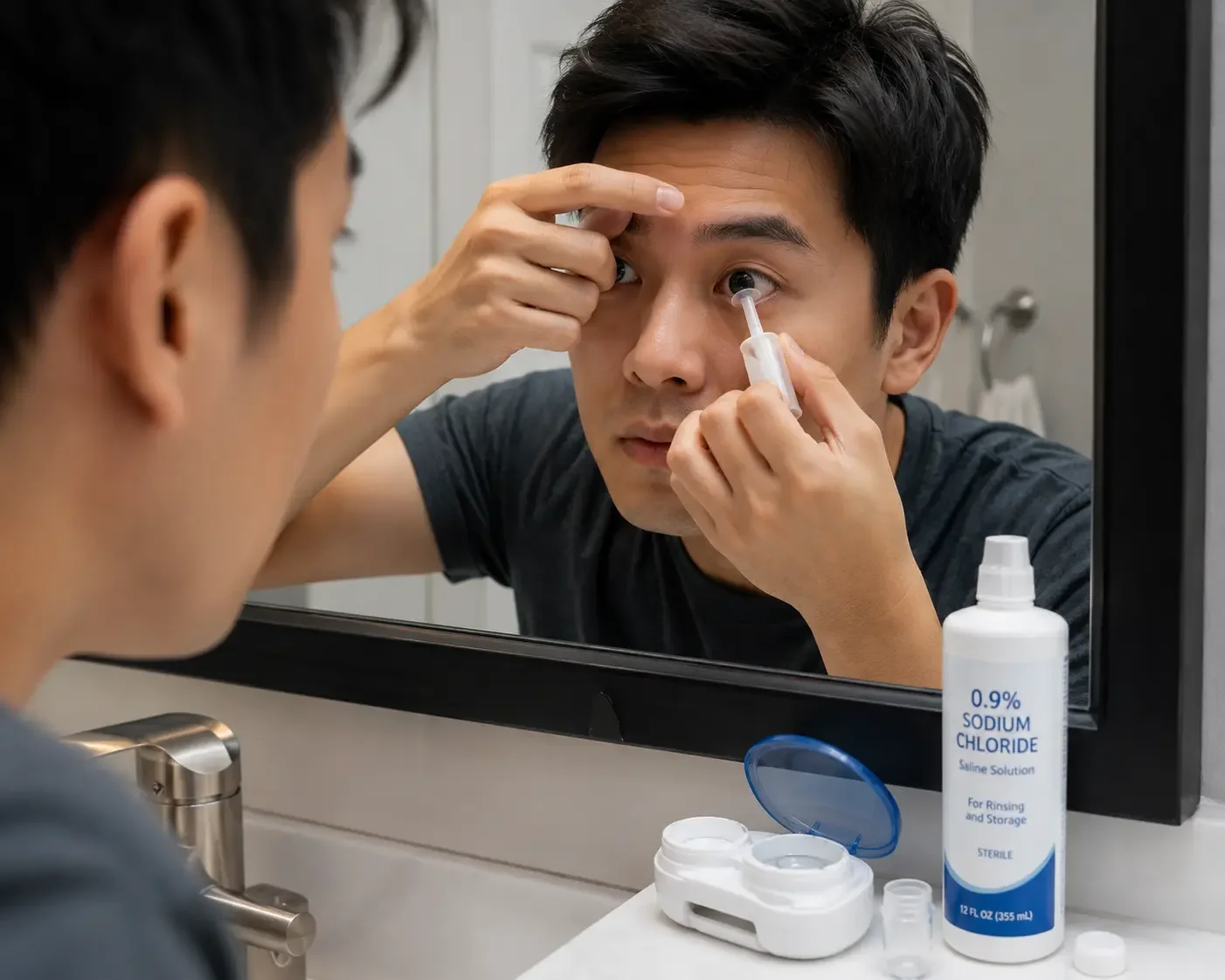
Insertion and removal require practice. You apply the lens while it's filled with saline, which means tilting the lens without spilling. Most people need two to three weeks before they feel comfortable.
The fitting process is lengthy. Getting the right fit requires multiple appointments with a specialist trained in complex contact lens fitting. Two to four visits before achieving an optimal fit is common.
Cost is a real barrier. At $1,500 to $4,000 per pair, scleral lenses are significantly more expensive than standard options. Insurance coverage through plans like vision plans often does not cover them. Medical insurance (for diagnoses like keratoconus) may contribute, but prior authorization is frequently required and not guaranteed.
Maintenance takes time. Lenses must be cleaned, stored in proper solution, and refilled with preservative-free saline every time you put them in. The routine is more involved than soft lens care.
Mid-day fogging can occur. Some patients experience clouding of the saline layer as the day progresses, requiring removal, cleaning, and reinsertion. Adjustments in fit or solution type can usually address this.
When You Should Contact Your Eye Doctor
Scleral lens wear is generally safe when managed properly, but certain symptoms require prompt attention.
Sudden blurry vision that doesn't clear after reinserting the lens
Eye redness that persists after lens removal
Pain, burning, or foreign body sensation during wear
Any visible change in the lens (chips, cracks, warping)
Signs of infection: discharge, excessive tearing, light sensitivity
I would not recommend trying to troubleshoot these symptoms on your own. Scleral lens-related complications can escalate quickly, especially for patients who already have compromised corneal tissue. Any of these signs warrant a call to your fitting specialist the same day.
How Long Scleral Lenses Last and What Daily Wear Looks Like
Scleral lenses typically last one to two years with proper care. The rigid material is more durable than soft lenses, but it scratches and deposits proteins over time, which can degrade optical clarity and increase the risk of eye irritation.
Daily wear duration varies by patient. Most practitioners recommend starting with four to six hours and gradually increasing wear time as the eye adapts. Many patients ultimately wear their lenses for eight to twelve hours a day. Some patients with severe dry eye or surface disease may have shorter tolerance windows, particularly early in wear.
The cleaning routine includes:
Rinsing the lens with multipurpose or hydrogen peroxide-based solution after removal
Cleaning with a daily cleaner or digital rubbing step to remove protein deposits
Storing overnight in appropriate solution
Rinsing with preservative-free saline before filling and reinserting each morning
Enzymes or protein-removing cleaners are sometimes added weekly for patients who deposit heavily. Your fitting specialist should outline a routine specific to your lens material and wear pattern.
Things to Know
Scleral lenses require fitting by a specialist with experience in complex lens fitting, not all optometrists or ophthalmologists have this training.
The saline used to fill the lens must be preservative-free; standard saline with preservatives can cause corneal toxicity with sclerals.
Medicare may cover scleral lens fittings under certain diagnoses, but coverage rules changed in recent years and vary by contractor.
Not every patient with keratoconus needs sclerals immediately; milder cases often do well with soft lenses or corneal RGP lenses first.
Children and teenagers with keratoconus are increasingly being fitted with sclerals, particularly when the condition progresses rapidly.
The fitting process involves corneal topography, optical coherence tomography (OCT), and often a trial set of diagnostic lenses before final ordering.

Make it stand out
Whatever it is, the way you tell your story online can make all the difference.
Frequently Asked Questions
Q: How much do scleral lenses cost in the United States?
Scleral lenses typically cost between $1,500 and $4,000 per pair, not including fitting fees, which can add $200 to $500 or more.
Vision insurance rarely covers the full cost. If you have a diagnosed condition like keratoconus, your medical insurance may cover a portion under durable medical equipment or specialty contact lens benefits, but you'll likely need documentation from your eye doctor and prior authorization.
Q: Are scleral lenses safe to sleep in?
No, scleral lenses are not approved for overnight wear and should be removed before sleeping.
Sleeping in any contact lens significantly increases infection risk by reducing corneal oxygenation. With sclerals, the risk is compounded by the fact that the fluid reservoir can become a breeding ground for bacteria if the lens stays in for extended periods. Remove, clean, and store them nightly.
Q: How do I know if I'm a good candidate for scleral lenses?
You're likely a good candidate if you have an irregular cornea, chronic dry eye, or a condition like keratoconus that standard lenses can't correct adequately.
The best way to find out is a consultation with a specialist who performs corneal topography and assesses your ocular surface. They'll evaluate your corneal shape, tear production, and current prescription to determine whether sclerals are the most appropriate option.
Q: How long does it take to get used to scleral lenses?
Most people adapt to the physical sensation within two to four weeks, though mastering insertion and removal can take longer for some patients.
The lens itself feels different from soft lenses because of its rigidity and size. Many patients report that after the initial adaptation period, sclerals feel more comfortable than soft lenses because they don't touch the sensitive corneal surface.
Q: Can children wear scleral lenses?
Yes, children, including teenagers with progressing keratoconus, are fitted with scleral lenses when their condition warrants it.
The key considerations for younger patients are their ability to handle insertion and removal independently, which most teenagers can learn with practice. Parental involvement during the fitting and learning process is strongly encouraged, and more frequent follow-up appointments are typically scheduled to monitor corneal changes.
The Bottom Line on Why Someone Would Need a Scleral Lens
Scleral lenses exist for one core reason: to give people with eyes that conventional correction methods can't adequately serve a real solution. Whether the issue is a progressive corneal disease, a damaged ocular surface, post-surgical irregularity, or severe dry eye, sclerals address the problem from the outside in, protecting the eye while simultaneously correcting vision to a level that most patients haven't experienced with any other option.
If you've been told your eyes are "too difficult to fit," or if glasses and soft lenses have never worked well for you, a consultation with a specialist trained in scleral lens fitting is a worthwhile next step. Ask your optometrist or ophthalmologist for a referral to a contact lens specialist, or use the American Academy of Optometry's directory at aaopt.org to find a credentialed fitter in your area.
