
Custom Prosthetic Lenses in Plano, TX
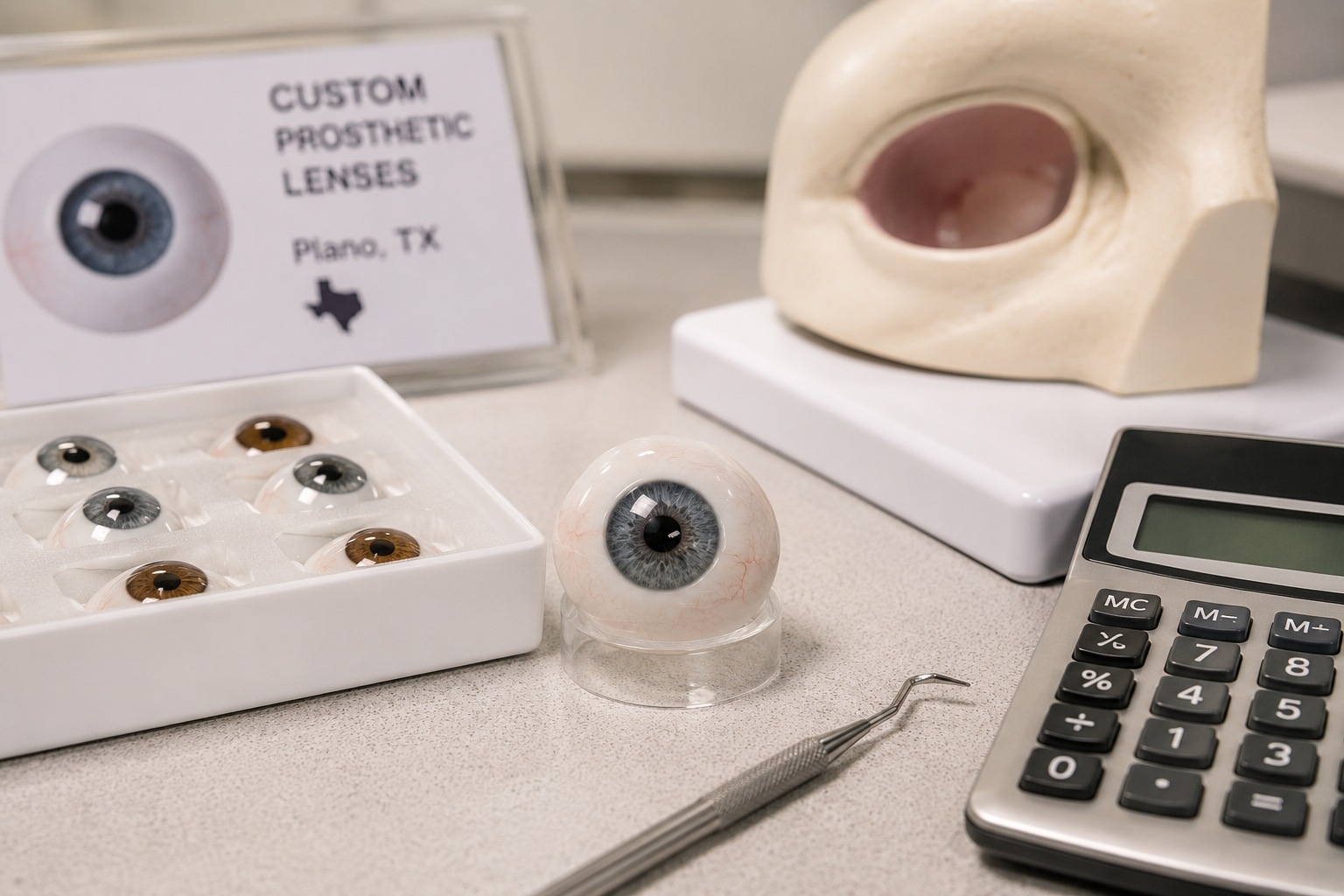
Custom prosthetic lenses are individually fabricated to replicate the natural appearance of an eye affected by trauma, congenital defects, or corneal scarring designed from precise ocular measurements by Dr. Beth Summers in Plano, TX.
What Ocular Disfigurement Costs Patients Beyond Their Vision
The impact of a visibly altered or disfigured eye extends far beyond the clinical. Patients dealing with corneal scarring after trauma, a disfigured iris following surgery, or a congenital condition that affects eye symmetry frequently report avoidance of social situations, difficulty in professional settings, and compounding light sensitivity that makes daily activity exhausting. Standard colored contact lenses purchased at a retail counter cannot replicate the precise iris pattern, pupil size, or limbal ring of the fellow eye. The result is a cosmetic outcome that looks artificial and does nothing to address glare or photophobia.
Restored natural appearance: A custom prosthetic lens is painted at the micron level to match the specific color, pattern, and diameter of the patient's fellow eye, not a generic stock design.
Functional glare reduction: Prosthetic lenses can block excess light entering through a compromised iris or abnormal pupil, reducing the photophobia that often accompanies corneal damage or surgical complications.
Daily confidence restored: Patients who have avoided eye contact, video calls, or public settings frequently report a meaningful shift in quality of life after a well-fitted prosthetic lens.
Consider a patient who sustained a workplace eye injury, resulting in corneal scarring and a distorted pupil. After two years of declining social interaction and wearing sunglasses indoors to manage glare, a properly fitted custom prosthetic lens matched the appearance of the fellow eye closely enough that the alteration was no longer apparent in normal conversation, and the built-in tint reduced light sensitivity to a manageable level.
How the Custom Prosthetic Lens Process Works at Texas Contact Lens Institute
Step 1: Advanced Diagnostic Imaging
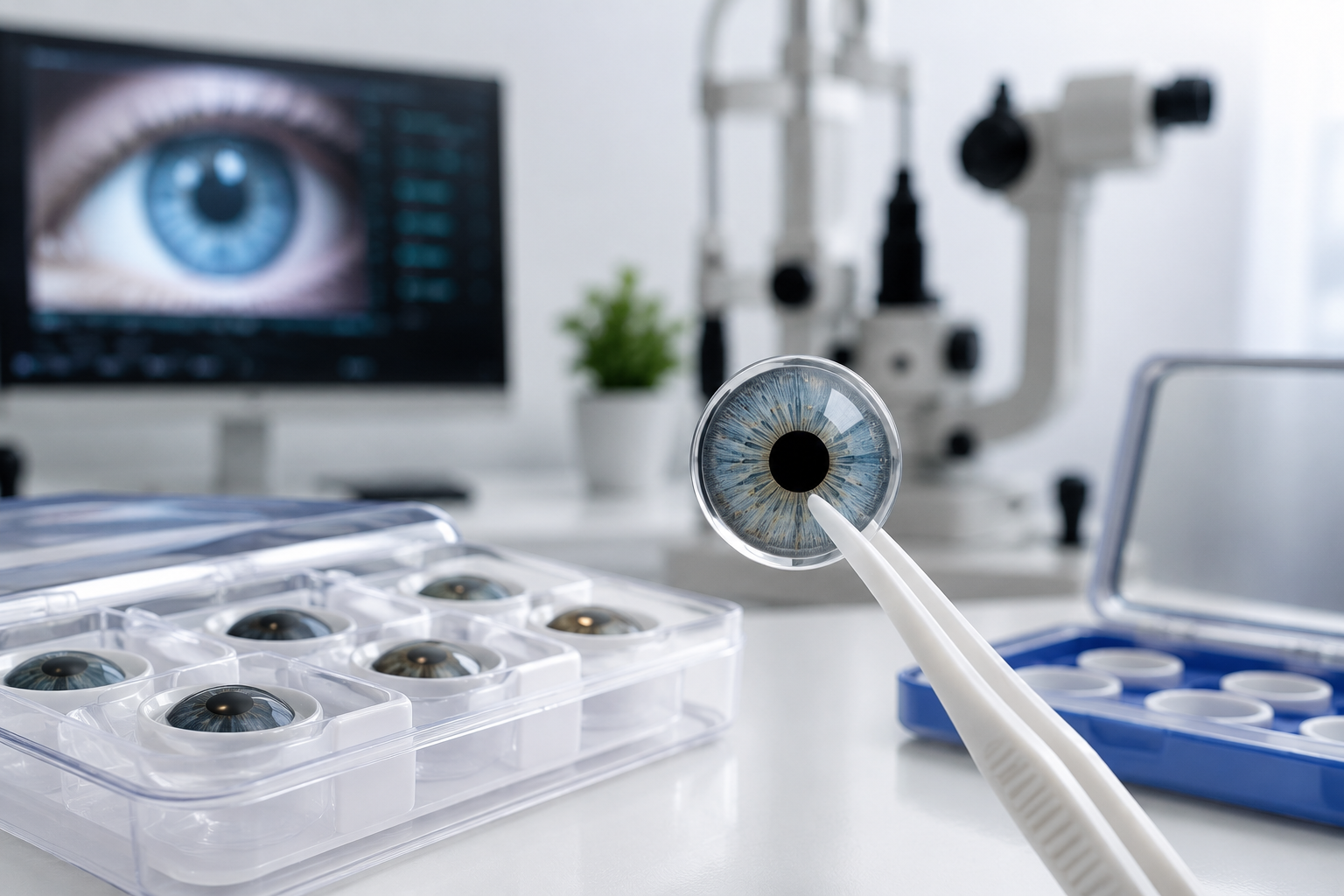
Every prosthetic lens fitting begins with corneal topography and ocular surface analysis. These measurements capture the exact curvature, surface irregularities, and dimensions of the affected eye in detail that a standard refraction exam cannot provide. This imaging session is the foundation for a lens that fits safely and looks accurate, not approximate.
Step 3: Custom Lens Engineering
Using the full diagnostic dataset and, in most fittings, a trial lens to verify the fit profile before the final lens is manufactured, the prosthetic lens is fabricated to the exact measurements of the patient's eye. For patients in the Plano area whose eyes have undergone corneal transplant, chemical injury, or multiple surgeries, this step may involve iterative trial lens refinement before the final design is committed to production.
Step 2: Photographic Iris Matching
Dr. Summers documents the patient's fellow eye with clinical photography to capture the specific iris color layering, limbal ring characteristics, and pupil diameter under standardized lighting. This step is what separates a genuinely matched prosthetic lens from a cosmetic lens that simply approximates an eye color. The imagery is sent alongside the topography data to the specialty laboratory.
Step 4: Fitting Verification and Refinement
When the lens arrives, Dr. Summers evaluates the fit, centration, movement, and cosmetic match under slit-lamp examination. Appearance is assessed under multiple lighting conditions because an iris match that looks accurate under clinic lighting must also hold under natural Texas sunlight and indoor fluorescent environments. If refinement is needed, it is requested before the patient leaves.
Step 5: Follow-Up and Long-Term Safety Monitoring
Custom prosthetic lenses are worn on the ocular surface of an already-compromised eye. Periodic follow-up appointments confirm the lens is not causing corneal stress, that the fit remains stable as the eye changes, and that the cosmetic match continues to meet the patient's expectations over time.

What to Look for Before Hiring a Prosthetic Lens Provider in Plano
Prosthetic lens fitting is one of the most technically demanding subspecialties in contact lens practice. The criteria that separate a qualified provider from a general optometrist offering cosmetic lenses matter significantly.
Fellowship-level credentials in specialty lenses: Look for designations such as Fellow of the Scleral Lens Education Society (FSLS) or Fellow of the American Academy of Optometry (FAAO). These indicate advanced clinical training in complex lens design beyond the scope of a general optometry license.
Corneal topography as a standard part of the fitting: A provider who fits prosthetic lenses without advanced diagnostic imaging is working from estimates. Topographic mapping is the clinical standard for any irregular or compromised eye.
Experience with the underlying condition, not just the cosmetic need: Prosthetic lens patients often have corneal scarring, post-surgical surfaces, or ocular trauma histories. A provider who understands these conditions clinically will make safer fitting decisions than one focused purely on aesthetics.
Transparent process for lens revision: Ask directly what happens if the cosmetic match is inaccurate or the fit is uncomfortable after delivery. A credible provider will have a clear refinement or re-fabrication protocol.
A focused, non-retail practice environment: Prosthetic lens design requires unhurried clinical time. A high-volume optical dispensary environment is structurally misaligned with the complexity this work demands.
What Do Custom Prosthetic Lenses Cost in Plano, TX?
Custom prosthetic lens pricing in Plano varies based on several specific factors, and no two fittings carry the same cost because no two eyes present the same clinical complexity.
Factors that affect the final investment include:
Ocular complexity: A post-traumatic eye with an irregular corneal surface requires a more involved lens design than a cosmetically affected eye with a regular topography.
Number of trial lens iterations: Some fittings reach an accurate result in one or two trials; more complex corneal profiles may require additional refinement cycles, each affecting total cost.
Lens material and design type: Prosthetic lenses can be fabricated as soft lenses, rigid gas permeable designs, or scleral lens platforms depending on the eye's surface requirements.
Laboratory fabrication specificity: High-resolution iris painting with close color-matching to the fellow eye involves premium fabrication costs that differ from standard soft lens production.
Texas Contact Lens Institute does not bill insurance directly and operates as an out-of-network provider. A complete medical superbill is available after the fitting for independent submission to your insurer. Specialty lens consultations are provided at no charge. To get an accurate estimate based on your specific eye history, call or text (972) 299-8675.
Frequently Asked Questions About Custom Prosthetic Lenses
-
Most custom prosthetic lenses require two to four weeks from the time final measurements and iris photography are submitted to the specialty laboratory. Complex cases involving multiple trial lens adjustments before the final order is placed may extend this timeline. Dr. Summers confirms the expected turnaround at the fitting appointment so patients can plan accordingly.
-
In many cases, yes. When the affected eye retains usable vision, a prosthetic lens designed on a scleral or rigid gas permeable platform can provide optical correction simultaneously with cosmetic masking. For eyes with no functional vision, the lens is purely cosmetic, but glare reduction from the prosthetic tint frequently improves comfort even without visual correction.
-
If the cosmetic match is inaccurate under review at the fitting appointment, Dr. Summers requests laboratory refinement before the case is closed. Patients should expect to evaluate the lens under multiple lighting conditions at that appointment specifically to identify any color or diameter discrepancies before accepting the final lens.
-
Coverage varies significantly by plan and diagnosis code. Texas Contact Lens Institute does not bill insurance directly, but provides a complete medical superbill after the fitting that patients can submit independently. Prosthetic lenses associated with a documented ocular trauma or surgical complication are more likely to carry a billable diagnosis than purely cosmetic cases.
-
Your referring provider can submit a referral by phone, email, or online form. You can also contact Texas Contact Lens Institute directly at (972) 299-8675 to schedule your consultation. The initial specialty lens consultation is free of charge. Bring any prior corneal topography reports, surgical records, or lens fitting notes from your referring provider, as these significantly reduce diagnostic duplication at the first visit.
Book Your Custom Prosthetic Lens Consultation in Plano Today
If you or a patient you are referring to needs individually designed custom prosthetic lenses in Plano, TX, Texas Contact Lens Institute offers a no-charge specialty consultation with Dr. Beth Summers, FAAO, FSLS. Call or text (972) 299-8675 to schedule your appointment.