
Orthokeratology in Plano, TX
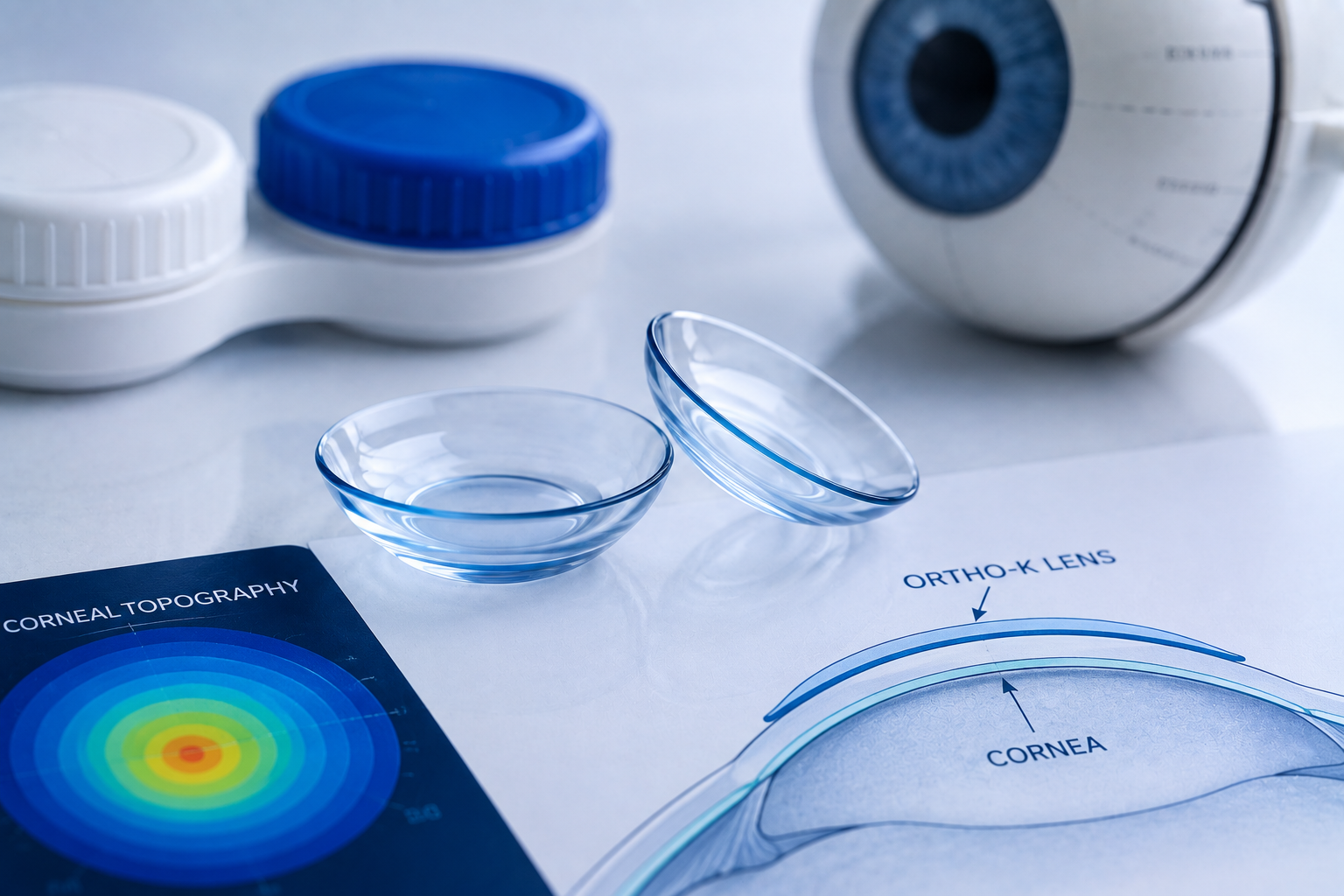
Ortho-K uses custom rigid gas permeable lenses worn overnight to gently reshape the cornea for clear, glasses-free daytime vision fitted personally by Dr. Beth Summers for Plano children with progressing myopia and adults seeking freedom from daytime correction.
What Happens When Myopia Goes Unmanaged in Growing Eyes
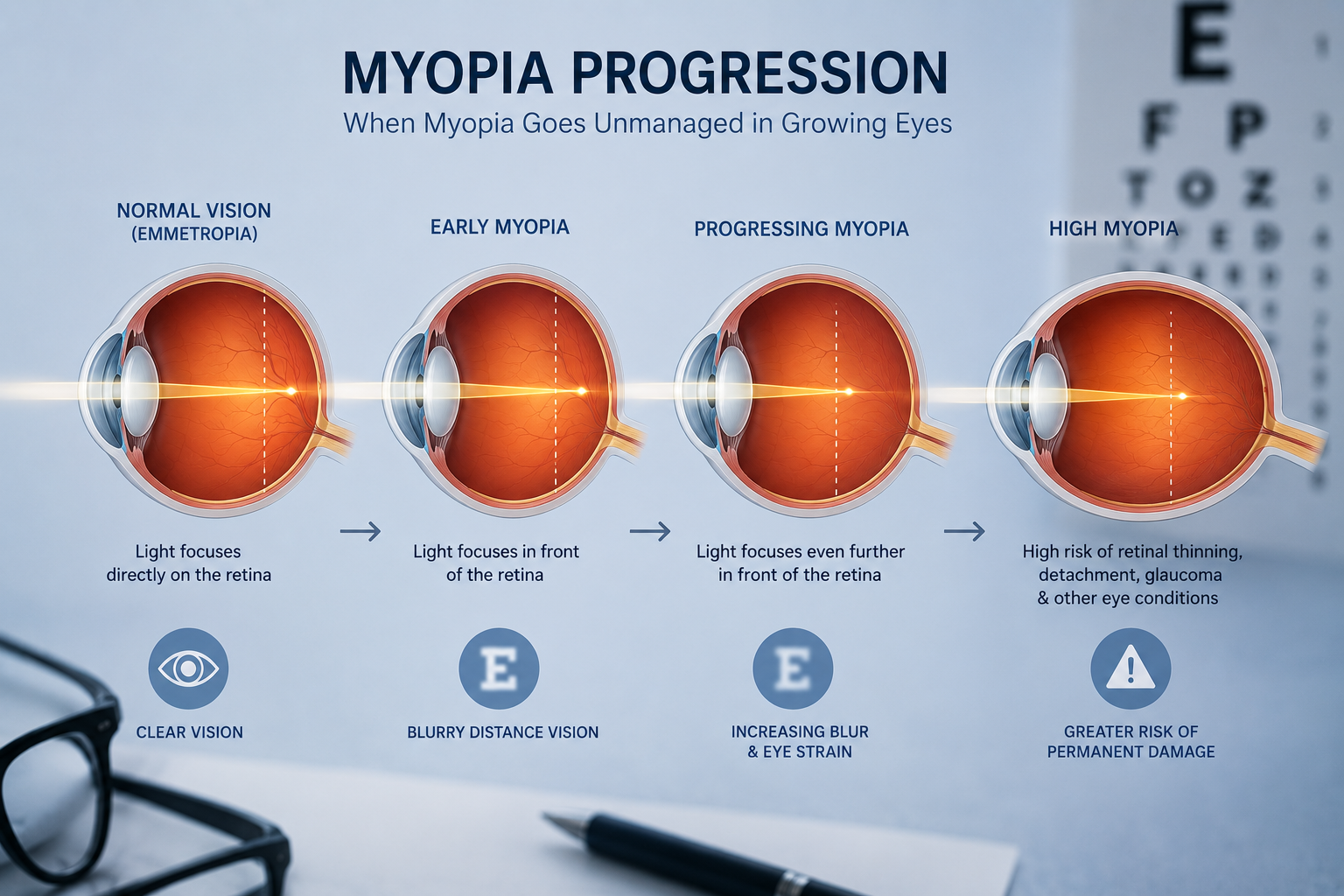
Childhood myopia is not simply a number on a prescription card. Each diopter of myopia progression increases the physical length of the eye, and longer eyes carry a measurably higher lifetime risk of retinal detachment, glaucoma, macular degeneration, and early-onset cataracts. Parents in Plano who wait and simply update glasses every year are not managing the condition; they are only correcting the blur while the underlying elongation continues unchecked.
Orthokeratology directly addresses this by applying controlled, overnight corneal reshaping that signals the peripheral retina in a way that appears to slow axial elongation. It is one of the most evidence-supported myopia control interventions available today.
Slowed prescription progression: Clinical data consistently shows Ortho-K reduces axial elongation by 30 to 50 percent compared to single-vision glasses in school-age children.
Glasses-free daytime function: Children wear nothing during sports, school, or outdoor play, eliminating the social friction and lens loss that comes with standard contacts.
Reversible, non-surgical intervention: Because the corneal reshaping is temporary, the process can be discontinued, adjusted, or replaced with another modality at any point.
A representative situation: a 10-year-old presents with myopia progressing by roughly 0.75 diopters per year, already at -3.00. After fitting Ortho-K lenses and monitoring over 18 months, the annual progression slows to under 0.25 diopters, and the child completes the school day with no lenses in at all.
How the Orthokeratology Process Works at Texas Contact Lens Institute
Step 1: Advanced Corneal Mapping
Before any lens is designed, Dr. Summers performs corneal topography and ocular surface analysis that captures the precise curvature, elevation, and surface health of each eye. Standard refraction appointments do not produce this level of data. The maps reveal corneal asymmetry, surface irregularity, and tear film quality, all of which determine whether Ortho-K is appropriate and how the lens geometry should be structured.
Step 3: The First Overnight Wear Cycle
Patients take the lenses home and wear them during sleep for the first time, typically six to eight hours. For most patients in the Plano area, noticeably clearer vision is present within one to three mornings. Full treatment effect, meaning vision stable throughout the full waking day, usually develops within ten to fourteen days of consistent wear. Dr. Summers advises patients on insertion, removal, and the cleaning protocol specific to the lens material prescribed.
Step 2: Custom Lens Design and Initial Fitting
Using the topographic dataset, Dr. Summers designs a lens tailored to the micron-level measurements of the patient's cornea, not a stock size selected from a chart. A trial lens is placed during the appointment, and the fit is assessed with fluorescein and slit-lamp evaluation before the lens is finalized. This step distinguishes a specialty fitting from the standardized Ortho-K protocols used in general practice.
Step 4: Follow-Up Topography and Fit Verification
A follow-up appointment assesses the corneal response map, confirming the reshaping is centered, symmetric, and producing the targeted refractive effect. This is not a courtesy check; it is the clinical step that prevents decentration issues and ensures the peripheral treatment zone is positioned correctly for myopia control benefit.
Step 5: Ongoing Co-Managed Monitoring
Ortho-K is not a one-time fitting. Corneal shape changes as children grow, and annual or semi-annual topography checks ensure the lens design keeps pace with the eye. Texas Contact Lens Institute coordinates findings with the patient's primary eye care provider, who continues to manage routine eye health outside the scope of specialty lens care.

What to Look for Before Hiring an Orthokeratology Provider in Plano
Orthokeratology requires a level of diagnostic equipment and clinical judgment that most general optometry practices do not maintain. Before booking a fitting, ask these questions.
Does the provider hold a specialty lens fellowship credential? The FAAO and FSLS designations indicate advanced, peer-reviewed training in contact lens science. These are earned credentials, not purchased titles, and they signal a practitioner who fits complex corneas professionally, not occasionally.
Is corneal topography performed before every fitting, or is refraction alone used? Any provider designing an Ortho-K lens without a topographic map of the cornea is working from incomplete data. This directly affects centration, comfort, and myopia control outcome.
Is the lens design customized per patient, or selected from a pre-set parameter range? Stock Ortho-K fitting sets work for textbook corneas. Patients with mild asymmetry, higher prescriptions, or unusual corneal geometry need custom design.
Is there a structured follow-up protocol? A fitting appointment without a scheduled topography verification is incomplete. Ask what the follow-up schedule looks like in the first three months.
Does the provider have documented experience with pediatric myopia management? Children are not small adults. Compliance, insertion technique, lens hygiene, and the decision to use Ortho-K versus multifocal soft lenses as the primary tool all require pediatric-specific clinical reasoning.
What Does Orthokeratology Cost in Plano, TX?
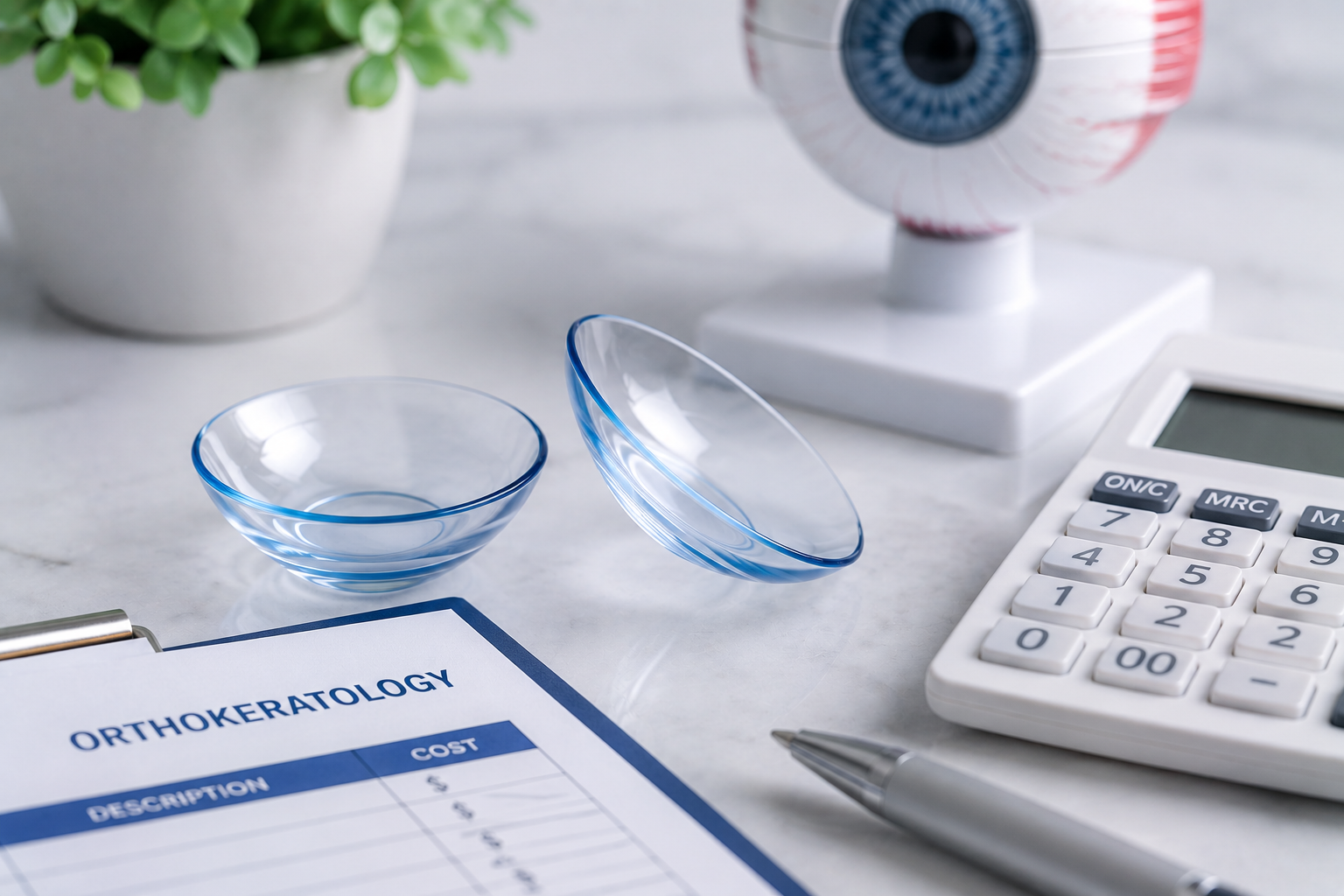
Orthokeratology pricing is not a single flat fee, and any provider quoting a universal price without examining the patient first is not pricing the service accurately. Several factors move the final figure:
Prescription complexity: Higher myopia requires steeper treatment curves and more precise lens geometry, which increases the design and material cost.
Degree of corneal asymmetry: A symmetric, regular cornea fits from a narrower design range than an asymmetric cornea that requires custom parameter engineering.
Number of lenses required in the fitting process: Some corneas reach the optimal result with the first lens design. Others require two or three iterations before the topographic response is centered and consistent.
Follow-up intensity: Patients who require more frequent monitoring during the stabilization period accumulate additional clinical contact time.
Texas Contact Lens Institute does not bill insurance directly and is an out-of-network provider. A complete medical superbill is provided on request after fitting, which patients can submit independently to their insurer. Specialty lens consultations are free of charge. For current pricing specific to your or your child's prescription, call or text (972) 299-8675.
Frequently Asked Questions About Orthokeratology in Plano, TX
-
Most patients notice meaningful improvement within the first one to three mornings of consistent overnight wear. Full stabilization, meaning clear vision that holds through the entire waking day, typically develops within ten to fourteen days. Patients with higher prescriptions may need up to three to four weeks before the treatment effect fully stabilizes.
-
Ortho-K is considered safe for children who can manage lens insertion and removal reliably, which most kids achieve by age eight to ten with parental support. The lens itself does not touch the cornea during the day. The primary safety requirement is consistent cleaning and hygiene, which Dr. Summers covers in detail at the fitting appointment.
-
The corneal reshaping produced by Ortho-K is temporary and fully reversible. If lenses are discontinued, the cornea gradually returns to its original shape over a period of days to weeks, and the prescription returns with it. This is a feature, not a flaw; it means the process can be paused, adjusted, or replaced with another myopia control method at any time.
-
Adults with stable myopia use Ortho-K successfully for glasses-free and daytime contact lens-free vision. The myopia control benefit that makes it particularly valuable in children still applies to young adults whose prescriptions have not fully stabilized. For adults with fully stable myopia, the primary motivation is usually daytime freedom, especially for athletes, swimmers, or people who work in dusty or screen-intensive environments.
-
Bring your most recent eyeglass or contact lens prescription and any prior corneal topography reports if they are available. If your child has been tracking myopia progression, bring the records showing prior refraction history. The consultation itself is free of charge. Appointments are by appointment only at 6020 W Parker Rd Ste 260, Plano, TX 75093, Monday through Friday, 9:00 AM to 3:00 PM.
Book Your Orthokeratology Consultation in Plano Today
If your child's prescription is climbing each year, or you are ready to stop depending on glasses and daytime lenses, an Ortho-K evaluation is the clearest next step. Call or text Texas Contact Lens Institute at (972) 299-8675 to schedule your free specialty lens consultation.