
Signs Your Scleral Lenses Don't Fit Correctly and What to Do About It
When your scleral lenses don't fit correctly, your eyes will usually tell you before your specialist does. Redness, blurred vision, discomfort after short wear times, and visible lens compression are the most common signals that something is off.
Key Takeaways
A tight fit and a loose fit produce different symptoms, and treating one like the other makes things worse.
Limbal bearing is the most serious fitting problem and can cause lasting damage to stem cells if left uncorrected.
Most patients require multiple fitting visits before reaching an optimal lens; this is normal, not a failure.
Symptoms like end-of-day fogging may point to solution issues rather than lens geometry.
A qualified scleral lens specialist will use corneal and scleral topography to diagnose fit problems that you cannot identify on your own.
Texas Contact Lens Institute (6020 W Parker Rd Ste 260, Plano, TX 75093) offers specialized scleral lens fitting for patients across the Dallas area.
When Scleral Lenses Are Too Tight: Compression Signs You Can Feel and See
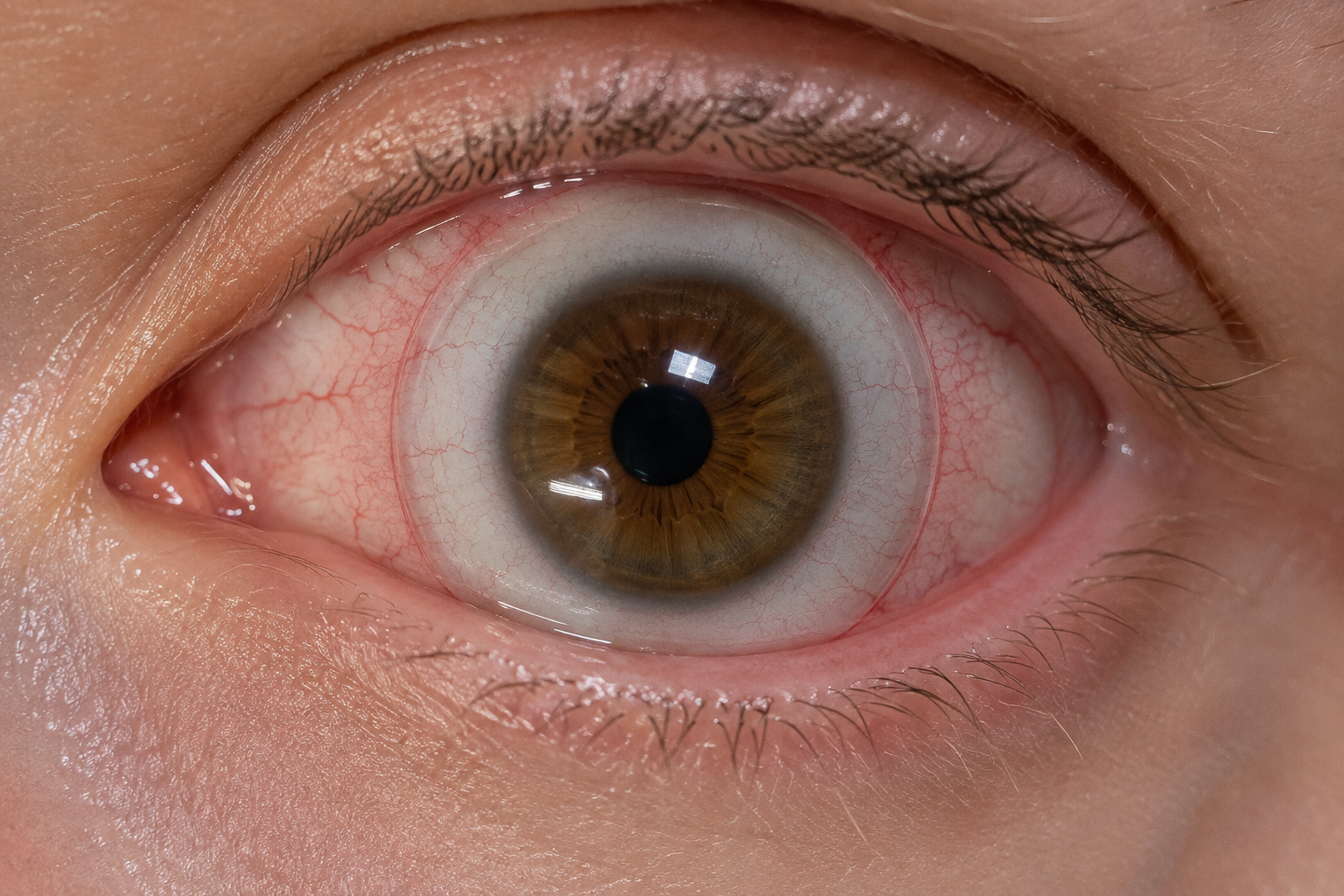
A lens fitting too tightly against your sclera creates what specialists call circumferential compression. You may notice a visible ring of blanching (whitening) around the edge of the lens after removal, or your eyes may appear red in a band-like pattern around the limbus during wear. Some patients also describe a sensation of pressure that builds over the course of the day, even if the lens felt fine initially.
Tight-fitting lenses restrict normal circulation beneath and around the lens. Over time, this can cause what is clinically described as paralimbal injection, a concentrated redness near the colored part of your eye. If you remove your lens and the blanching pattern takes more than 20 minutes to resolve, that is a meaningful sign the peripheral curves need to be flattened or the lens design needs to change entirely.
Common signs of a lens that is too tight:
A red ring visible in the mirror during or after wear
Pressure sensation that builds throughout the day
White ring imprinted on the sclera after removal
Reduced comfort after the first hour of wear
Haptic Mismatch and Uneven Bearing: Why Sectorial Problems Are Easy to Miss
Your sclera is not a perfect sphere. It has an irregular, often asymmetric shape, and a spherical scleral lens may not conform evenly across that surface. This creates what is called a haptic mismatch, where one quadrant of the lens lifts away from the eye (edge lift) while the opposite quadrant presses too firmly. You might feel this as a localized irritation or notice one side of your eye looking redder than the other.
According to prescribing data cited in10 years of scleral lens research from Contact Lens Spectrum, scleral lenses were prescribed for corneal irregularity in 74% of cases, meaning a large share of patients already have complex ocular geometry that increases the chance of haptic mismatch. Corneoscleral topography, a surface mapping tool, is the most reliable way to identify and correct this kind of uneven bearing. If your specialist is not using topography guidance in difficult cases, ask about it.
Physical obstacles on the sclera, such as pingueculas (yellowish tissue growths near the cornea), can also interfere with even lens placement. Solutions include reducing lens diameter, adding notches to the lens edge, or using ballasted designs that account for the obstruction.
Corneal Vaulting Problems: Too Much or Too Little Clearance
Vault refers to the fluid-filled space between the back of the lens and the surface of your cornea. Too little vault causes the lens to touch the cornea, which creates bearing, visual distortion, and risks to corneal health. Too much vault can cause fogging, lens instability, and discomfort from excessive fluid volume.
Two specific vault patterns are common:
Paracentral bearing in keratoconus: The lens clears the cone tip but rests on the surrounding corneal tissue. Increasing central vault usually resolves this. According to aPubMed-indexed study on profilometry-guided scleral lens fitting, patients in that protocol required a mean of 2.9 follow-up visits and 2.1 lenses ordered per eye, which illustrates how iterative this process genuinely is.
Mid-peripheral bearing after refractive surgery: Eyes that have had LASIK or PRK develop a prolate shape that standard scleral lens geometry does not accommodate well. Reverse geometry designs are typically the appropriate solution here.


Limbal Bearing: The Fitting Problem That Cannot Wait
Limbal bearing is the most serious sign that your scleral lenses don't fit correctly. The limbus is the border between your cornea and the white of your eye, and it houses the stem cells responsible for maintaining healthy corneal tissue. When a lens is undersized or vaulted too flatly, it contacts the limbus directly during wear.
Early signs include persistent redness specifically at the 3 o'clock and 9 o'clock positions, pain that is sharper than general discomfort, and reduced visual clarity that does not improve with blinking. Left uncorrected, limbal bearing can lead to corneal neovascularization (new blood vessel growth into the cornea), keratitis, and eventually limbal stem cell deficiency, a condition that is far more difficult to treat than the original fitting problem.
The clinical trials database at ClinicalTrials.gov includes ongoing research comparing corneal and scleral RGP lenses for ocular health outcomes in keratoconus, underscoring how seriously the field takes these complications.
If you suspect limbal bearing, stop wearing the lens and contact your specialist promptly. Do not attempt to push through the discomfort.
Things to Know
Most patients need several attempts before reaching an ideal fit. A 2025 study in the Turkish Journal of Ophthalmology found an average of 3.7 trial lenses per eye were needed.
End-of-day blurring does not always mean a fitting problem; lens solution composition and insertion technique can both cause midday fogging independent of lens geometry.
Scleral lens fits increased from roughly 6% of all rigid gas-permeable lens fits in 2013 to 22% in 2023, according to International Contact Lens Prescribing reports, meaning more practitioners are developing the skills to troubleshoot these cases.
The SCOPE Study on scleral lens prescribing patterns remains a key reference for understanding how and why scleral lenses are prescribed across the U.S.
Never modify lens insertion technique, solution type, or wear schedule significantly without consulting your specialist first; these changes can mask symptoms rather than resolve them.

Frequently Asked Questions
Q: How soon should scleral lenses feel comfortable after being fitted?
Most patients experience some initial awareness of the lens, but significant discomfort within the first 30 minutes is a sign worth discussing with your specialist.
Adaptation typically takes one to two weeks for new wearers. If discomfort persists beyond that initial period or worsens during the wearing session rather than improving, the fit should be reassessed rather than tolerated.
Q: Can I tell if my scleral lens vault is off without a slit lamp?
Not reliably, though some signs are visible to the naked eye with a mirror and good lighting.
Touching the cornea may produce noticeable blur that does not clear with blinking. Excessive vault often causes a visible bubble or milky appearance in the fluid reservoir beneath the lens.
Q: Why do my scleral lenses fog up in the afternoon even when they felt clear in the morning?
Midday fogging is usually caused by debris or proteins migrating into the fluid layer beneath the lens, not always a fit problem.
Your filling solution, tear chemistry, and lens material can all contribute. Ask your specialist about using a preservative-free saline solution and whether your cleaning regimen is thorough enough.
Q: Is it normal to need more than one lens remake before getting the right fit?
Yes, multiple remakes are common and reflect the complexity of fitting a custom lens to an irregular eye surface.
Research cited in fitting studies shows patients often require 2 to 4 trial lenses per eye before reaching an optimal result. A reliable specialist will set this expectation at your first appointment.
Q: When should I stop wearing my scleral lenses entirely and seek urgent care?
Stop wearing immediately if you experience sharp pain, sudden vision loss, significant eye discharge, or a cornea that appears cloudy or hazy.
These symptoms can indicate infection, corneal abrasion, or acute hypoxia. Contact your eye care provider the same day; do not reinsert the lens until you have been evaluated.
The Bottom Line on Signs Your Scleral Lenses Don't Fit Correctly
Fit problems with scleral lenses range from mild discomfort that a single adjustment can resolve to serious complications like limbal bearing that require immediate attention. Knowing what to look for, whether that is compression rings, uneven redness, or persistent blur, gives you the ability to act before a minor issue becomes a bigger one.
If you are in the Dallas area and experiencing any of the symptoms described here, reach out to Texas Contact Lens Institute at 6020 W Parker Rd Ste 260, Plano, TX 75093, or call +1 972-299-8675 to schedule a fitting reassessment with a specialist who focuses on complex lens cases.
