

Custom Scleral Lenses in Plano, TX
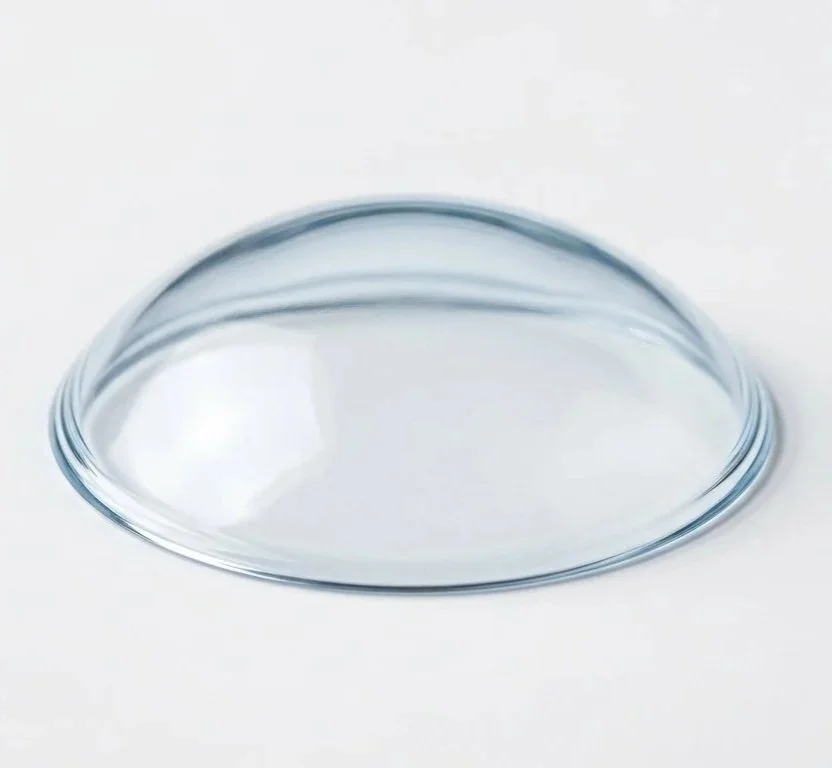
Custom scleral lenses vault over the cornea to create a fluid reservoir that sharpens vision and soothes the ocular surface fitted personally by Dr. Beth Summers for Plano patients with keratoconus, corneal scarring, or severe dry eye.
What Happens When Standard Lenses Keep Failing You
Patients who need custom scleral lenses rarely arrive at that conclusion quickly. Most spend months, sometimes years, cycling through glasses prescriptions that plateau, soft contact lenses that blur or fall out of position, and specialist appointments that end without a clear path forward. The longer that cycle continues, the greater the impact on daily function: driving becomes risky, reading becomes exhausting, and work that demands reliable vision becomes genuinely difficult.
The underlying problem in most of these cases is an irregular corneal surface. Standard lenses are designed for predictable, spherical corneas. When the cornea is steep, asymmetrical, scarred, or surgically altered, no off-the-shelf lens can conform to it accurately. A custom scleral lens bypasses the corneal surface entirely, replacing its irregular shape with a smooth optical surface filled with preservative-free saline.
Stable, consistent vision: Because scleral lenses rest on the sclera rather than the cornea, they do not shift with each blink, eliminating the visual fluctuation that frustrates so many irregular cornea patients.
All-day ocular surface protection: The saline reservoir maintained between the lens and the cornea provides continuous moisture, making sclerals the only contact lens option that simultaneously corrects vision and treats ocular surface disease. Patients are often pleasantly surprised at how comfortable the sclerals are.
A path forward when other options have been exhausted: For patients told they are "not contact lens candidates," custom scleral fitting frequently restores functional vision that surgery alone cannot achieve.
Step 1: Advanced Diagnostic Imaging
Every fitting begins with corneal topography and ocular surface analysis. These imaging tools map the three-dimensional shape of the cornea in detail that a standard refraction cannot capture, identifying the specific pattern of irregularity, the degree of elevation, and the condition of the ocular surface. This data often supplements imaging already collected by their primary eye care provider, giving Dr. Summers a comprehensive picture before the first trial lens touches the eye.
How the Custom Scleral Lens Fitting Process Works at Texas Contact Lens Institute
Step 2: Custom Lens Design and Trial Fitting
Using the diagnostic dataset, Dr. Summers selects or designs a trial lens with parameters matched to the eye's unique architecture. This step may involve multiple trial lenses in a single visit, with adjustments made to diameter, sagittal depth, and peripheral curves. After settling on the eye, the lens assessment involves carefully observing how the lens vaults over the cornea, how the fluid reservoir behaves, and how the lens’ edges interact with the sclera, which varies in shape from patient to patient. The lens is then designed and ordered from a specialty lab using the information gathered from the fitting.
Step 3: Lens Verification and Insertion Training
Once the final design is ordered and delivered, the lens is verified against the prescription parameters before it is dispensed. The lens is then assessed on-eye to evaluate fit, vision and comfort. Patients then receive hands-on insertion, removal, and care training. Modifications are often needed and will be ordered and evaluated in another visit.
Step 4: Follow-Up and Long-Term Co-Management
Periodic follow-up visits monitor corneal health, lens fit, and vision stability over time. Because Texas Contact Lens Institute operates as a specialty practice, patients return to their primary eye care provider for routine exams and ongoing care. Summers coordinates directly with referring providers to ensure continuity, which is a model that Plano-area optometrists and ophthalmologists rely on when their patients have needs beyond the scope of a general practice.

What to Look for in a Custom Scleral Lens Provider in Plano
Scleral lens fitting is a specialized area of optometry. The outcomes depend almost entirely on the diagnostics, the design process, and the clinical judgment of the fitting optometrist. Before committing to a provider, consider the following criteria:
Fellowship credentials in specialty lenses: Look for designations such as FAAO (Fellow of the American Academy of Optometry) or FSLS (Fellow of the Scleral Lens Education Society). These fellowships require demonstrated clinical expertise and peer review, not just course completion.
Dedicated specialty practice vs. add-on service: Providers who fit sclerals as one of dozens of services they offer may not have the same depth of experience or lens inventory as a practice focused exclusively on complex lens cases.
Transparent fitting process and realistic timelines: A qualified provider will explain upfront that scleral fitting typically requires multiple visits, especially for complex corneal histories. Promises of a single-visit fit for an irregular cornea are a red flag.
Verifiable experience with your specific condition: Ask directly whether the provider has fitted lenses for your diagnosis, whether that is keratoconus, post-LASIK ectasia, Sjögren's syndrome, corneal transplant, RK or dry eye. Published clinical work or continuing education presentations in those areas add credibility.
Frequently Asked Questions About Custom Scleral Lenses in Plano

-
Most patients complete their fitting within four visits, though eyes with post-surgical histories, severe irregularity, or active ocular surface disease may require additional refinement visits. Each visit builds on the previous one, with lens parameters adjusted based on how the eye responds, so the process is iterative by design rather than a sign of a problem.
-
If possible, bring any prior corneal topography maps, your current glasses or contact lens prescription, and a list of medications including eye drops, since some treatments affect ocular surface findings. If you were referred by another provider, ask them to forward their most recent exam/ imaging. Arriving with that documentation allows Dr. Summers to spend the appointment time on evaluation rather than reconstructing your history.
-
Custom scleral lenses are refined based on clinical findings at each follow-up visit. If vision or comfort falls short of the target, Dr. Summers adjusts the design parameters and reorders accordingly. Because the lens design is tied to your specific ocular measurements, corrections are precise rather than approximate, and most fit issues are resolved within the planned follow-up sequence.
-
Texas Contact Lens Institute is an out-of-network provider and does not bill insurance directly. Upon request, a complete medical superbill is provided after initial fitting appointment, which patients submit independently to their insurance carrier. Many plans with out-of-network benefits provide partial reimbursement for medically necessary specialty lenses, particularly for diagnoses like keratoconus or corneal transplant.
-
Your referring provider can submit a referral by phone, email, or online form. Alternatively, you can call or text Texas Contact Lens Institute directly at (972) 299-8675 to schedule your free consultation. The practice operates Monday through Friday, 9:00 AM to 3:00 PM, by appointment only, at 6020 W Parker Rd, Suite 260, Plano, TX 75093.
Book Your Free Custom Scleral Lens Consultation in Plano Today
If you are in Plano or anywhere in the Dallas-Fort Worth area and standard lenses have not given you the vision you need, Texas Contact Lens Institute offers a free specialty lens consultation with no obligation. Call or text (972) 299-8675 to schedule your appointment