Vision Problems After LASIK, RK & Eye Surgery
Vision problems after LASIK, RK, and eye surgery from dry eyes and glare to irregular astigmatism are more common than most patients expect, and often can't be fixed with standard glasses or off-the-shelf contacts.

What Patients Experience and What Actually Helps
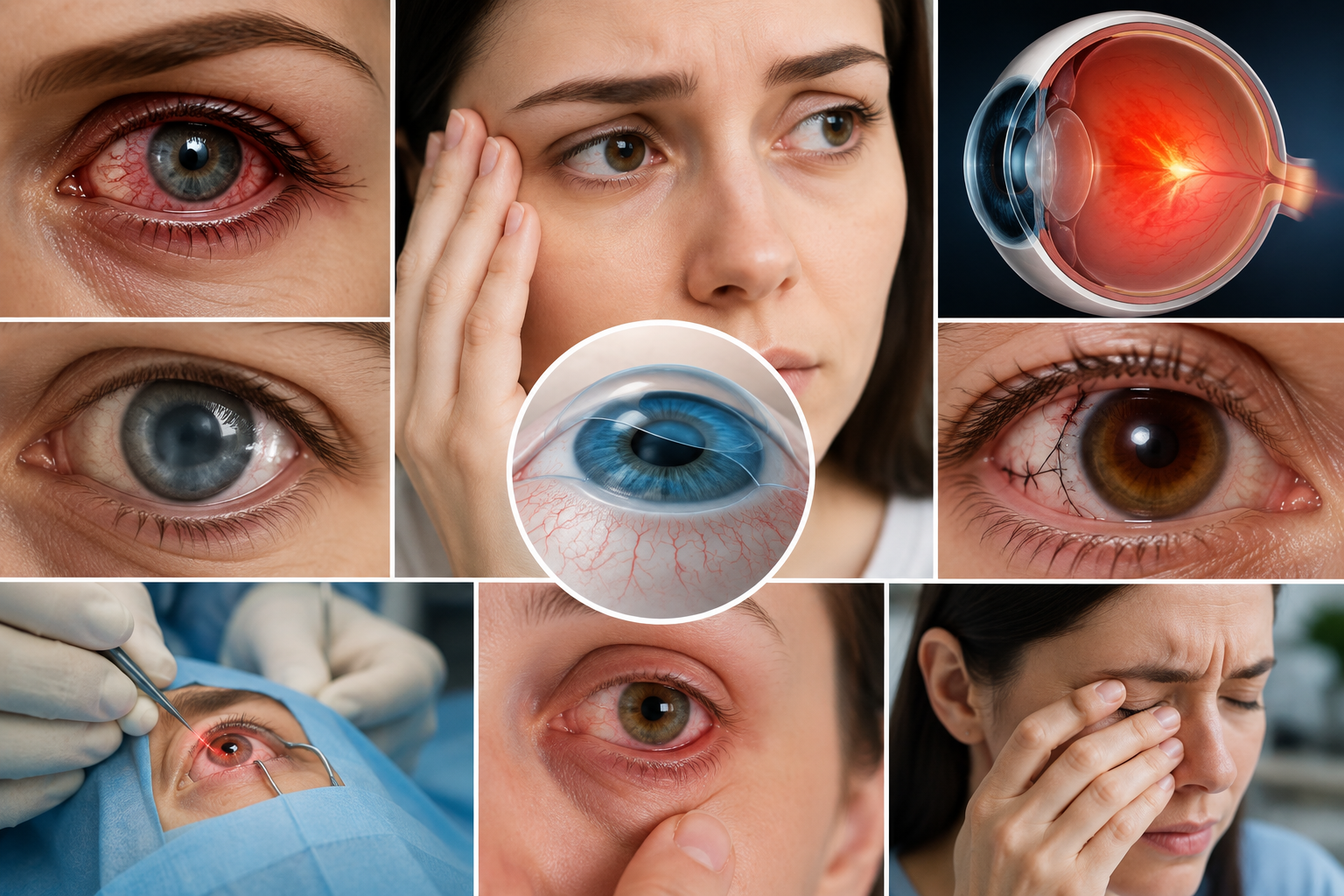
Vision problems after LASIK, RK, and eye surgery are more common than most patients expect, ranging from dry eyes and glare to irregular astigmatism and corneal changes. While serious complications are rare, even mild visual disturbances can significantly impact daily life, especially when standard glasses or off-the-shelf contacts no longer provide a clear fix.
Key Takeaways
Most LASIK patients achieve excellent outcomes, but a meaningful subset develops persistent visual disturbances that require specialty care beyond routine follow-up.
Radial keratotomy (RK), performed widely before LASIK became standard, carries a higher risk of long-term corneal instability compared to modern laser procedures.
Dry eye is the most frequently reported post-surgical complaint, affecting up to half of patients immediately after LASIK, though chronic cases represent a smaller portion.
Night vision problems like halos and starbursts are often temporary but can persist for months or even years in certain patients.
Specialty contact lenses, particularly scleral lenses, are one of the most effective non-surgical tools for restoring functional vision in post-surgical eyes.
Patients who are not getting satisfactory results from glasses or standard contacts after eye surgery should seek evaluation from a specialty lens provider.
The Most Frequently Reported Post-Surgical Complications
Understanding what can go wrong is the first step toward finding the right solution. Complications after refractive surgery generally fall into a few distinct categories, as outlined in research published on PubMed covering LASIK complications, etiology, and management.
Refractive Complications
Undercorrection or overcorrection: The eye does not reach the intended prescription target.
Irregular astigmatism: The corneal surface becomes uneven in ways a standard lens cannot correct.
Regression: Vision gradually drifts back toward the original prescription over months or years.
Decentration: The treatment zone is slightly off-center, causing asymmetric aberrations.
Dry Eye and Ocular Surface Issues
Dry eye is the most universally reported post-LASIK complaint. Research suggests that early post-operative dryness may affect up to 50% of patients in the weeks immediately following surgery. For most, symptoms improve within three to six months. Chronic dry eye, defined as lasting beyond six months with ongoing symptoms, affects a smaller percentage, estimated around 4% of LASIK patients. For RK patients, dry eye can be compounded by the structural changes to the cornea itself.
Night Vision Disturbances
Glare, halos, and starbursts around light sources at night are among the most disruptive visual problems patients report. These disturbances are especially pronounced during nighttime driving. For most patients, they diminish significantly within a few months. For others, they persist and can make nighttime driving genuinely unsafe.
Corneal Flap Complications (LASIK-Specific)
LASIK involves creating a thin flap on the corneal surface. Possible flap-related issues include displacement, wrinkling, and epithelial ingrowth, which refers to corneal surface cells growing underneath the flap where they do not belong. According to analysis on Collaborative EYE covering post-LASIK complications, these issues are rare but can directly affect visual quality and recovery.
Corneal Ectasia
Ectasia is a progressive thinning and bulging of the cornea that can develop after LASIK, particularly in patients with pre-existing corneal irregularity that was not detected before surgery. It produces significant distortion and often cannot be corrected with standard eyeglasses.