
Scleral Lenses for Stevens-J in Plano, TX
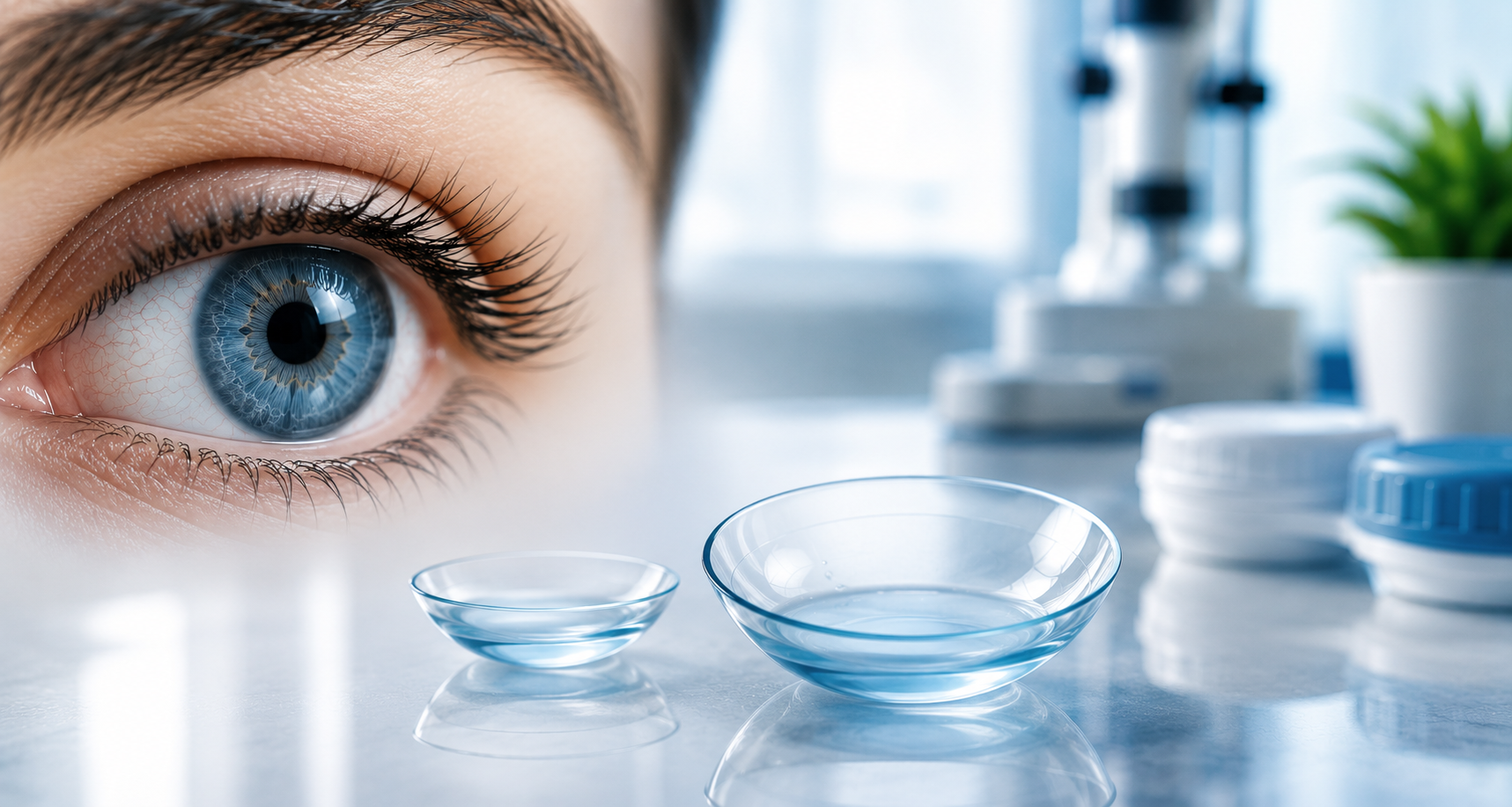
Scleral lenses hold a continuously replenished reservoir of preservative-free saline against the cornea all day fitted by Dr. Beth Summers in Plano for Sjögren's patients whose dry eye has outpaced artificial tears.

What Stevens-Johnson Syndrome Does to the Eyes, and Why Standard Lenses Fail
SJS is a severe mucocutaneous reaction that can devastate the ocular surface. The acute phase causes intense conjunctival inflammation, and in many survivors the long-term consequences include symblepharon formation, meibomian gland destruction, chronic cicatricial changes, and corneal scarring that distorts the surface beyond what any off-the-shelf lens can accommodate. The result is not just blurry vision: it is daily pain, extreme light sensitivity, constant dryness, and a corneal surface that conventional contact lenses irritate further with every blink.
Standard soft lenses sit directly on that compromised tissue, causing friction and worsening the very damage they are supposed to bridge. Glasses cannot correct the irregular astigmatism that scarring creates. Many SJS survivors cycle through multiple providers and multiple failed lens attempts before reaching a specialist with the equipment and experience to fit them properly.
Scleral lenses solve this at the mechanical level:
Continuous fluid reservoir: The lens never touches the cornea. A cushion of preservative-free saline sits between the lens and the ocular surface all day, providing hydration that no eye drop schedule can match.
Stable optics over irregular corneas: Because the lens bridges the irregular surface entirely, the fluid layer fills in the optical distortion caused by scarring, enabling clear, stable vision even when the cornea itself is significantly compromised.
Reduced surface exposure: The large lens diameter shields the cornea from the air and from lid friction, substantially reducing the mechanical irritation that drives SJS-related chronic pain.
A typical patient arriving at this practice has tried multiple soft lens brands, experienced worsening dryness and redness with each attempt, and been told by a general optometrist that contacts are no longer an option. After a custom scleral fitting calibrated to their specific ocular geometry, many report wearing lenses comfortably for eight or more hours for the first time since their diagnosis.
How the Scleral Lens Fitting Process Works for SJS Patients at Texas Contact Lens Institute
Step 1: Advanced Diagnostic Imaging of the Ocular Surface
Every SJS fitting begins with comprehensive corneal topography and ocular surface analysis. Dr. Summers maps the precise elevation, curvature, and irregularity of the cornea in three dimensions, capturing measurements that a standard slit-lamp exam cannot detect. This imaging identifies the extent of scarring, the pattern of irregularity, and any limbal involvement that will influence lens vault and landing zone design. For SJS eyes, this baseline map is also what allows safe monitoring of corneal health over time.
Step 2: Custom Lens Engineering to Exact Micron Specifications
Using the diagnostic dataset alongside a trial lens fitting, the scleral lens is engineered to the precise measurements of the individual eye. For SJS patients, this means accounting not just for corneal irregularity but also for conjunctival changes, scleral shape variations, and the need for adequate apical clearance over any elevated scar tissue. The lens is designed to rest gently on the sclera, bypassing the cornea entirely, with a vault calibrated so the fluid reservoir remains stable throughout the wearing period. No two SJS eyes are the same, and no lens design is borrowed from a catalogue.
Step 3: Trial Fitting, Assessment, and Adjustment
Once the initial lens is fabricated, the patient returns for a fitting assessment. Dr. Summers evaluates vault height, landing zone pressure, fluid lens clarity, and the patient's visual acuity under real conditions. Plano's climate, with its low seasonal humidity, can affect tear film behavior and lens comfort, so environmental factors are factored into the lens parameters. Most SJS fittings require one to three refinement appointments before the final lens design is confirmed.
Step 4: Dispensing, Insertion Training, and Lens Care Education
When the final lens is ready, the patient receives hands-on training in insertion and removal techniques specific to scleral lenses, which differ significantly from soft lens handling. Dr. Summers reviews the correct fill solution, storage protocol, and the signs of fit-related problems to watch for. SJS patients often have reduced manual dexterity or eyelid abnormalities that require modified insertion technique, and this session addresses those challenges directly.
Step 5: Co-Managed Follow-Up for Long-Term Corneal Safety
After dispensing, patients return for periodic check-ups to monitor corneal health, reassess vault and fit as the ocular surface changes over time, and adjust lens parameters as needed. Routine eye care returns to the patient's primary eye doctor, keeping the broader care team informed.

What to Look for Before Hiring a Scleral Lens Provider for Stevens-Johnson Syndrome
SJS eye disease is not a routine scleral lens indication. Many optometrists fit sclerals comfortably for dry eye or keratoconus but have limited experience managing the cicatricial changes, limbal stem cell deficiency, and inflammatory history that define SJS ocular disease. Choosing the wrong provider risks lens-related corneal damage, failed fittings, and wasted time and expense.
Fellowship credentials in specialty lenses: Look for designations such as Fellow of the Scleral Lens Education Society (FSLS) or Fellow of the American Academy of Optometry (FAAO). These require demonstrated clinical competency specifically in complex lens fitting, not just general optometry licensure.
Diagnostic imaging capability: A provider fitting SJS eyes without corneal topography is guessing. Confirm that advanced ocular surface imaging is part of the initial assessment, not an optional add-on.
Published or teaching experience in surgical or scarred corneas: Providers who teach or publish on compromised corneas bring a higher level of rigor to the fitting process. Ask whether the optometrist has clinical experience beyond routine specialty fitting.
Transparent refinement policy: Scleral lens fittings for complex conditions routinely require multiple adjustments. A reputable provider will outline upfront what follow-up appointments are included and what the process looks like if the initial design needs modification.
Medical-grade documentation: SJS fittings generate clinical records that need to coordinate with corneal specialists, rheumatologists, and referring ophthalmologists. Confirm the practice provides proper documentation and supports co-management.
What Do Scleral Lenses for Stevens-Johnson Syndrome Cost in Plano, TX?
Scleral lens fees for SJS vary significantly depending on the complexity of the ocular surface, the number of diagnostic and refinement appointments required, and the specific lens design selected. This is a medically complex fitting category, and the fee reflects that.
Key factors that affect the final cost include:
Degree of corneal irregularity and scarring: More irregular surfaces require more design iterations and more precise fabrication tolerances.
Number of fitting appointments: SJS fittings typically involve more refinement visits than standard scleral fittings for dry eye alone.
Lens material and design platform: High-oxygen specialty materials suited to compromised ocular surfaces carry a higher fabrication cost than standard lens blanks.
Bilateral versus unilateral fitting: Most SJS patients require lenses for both eyes, each designed independently based on their individual topographic profile.
Texas Contact Lens Institute does not bill insurance directly and operates as an out-of-network provider. A complete medical superbill is available on request after the fitting is complete, for independent submission to your insurer. The specialty lens consultation is free of charge. To receive accurate pricing for your specific case, call or text (972) 299-8675.

Frequently Asked Questions
-
Most SJS scleral lens fittings at Texas Contact Lens Institute require between three and five appointments spread over four to eight weeks. The first visit covers diagnostic imaging, the second involves a trial lens assessment, and subsequent visits refine the lens design before the final lens is dispensed. More complex ocular surface presentations may extend this timeline slightly.
-
Yes, for many SJS patients scleral lenses are the most effective tool for managing ocular surface pain. Because the lens vaults over the cornea and holds a fluid reservoir against the surface, it eliminates the lid-to-cornea friction and desiccation that drive SJS-related pain. Results vary based on the degree of corneal and conjunctival damage, but significant comfort improvement is the most consistently reported outcome.
-
The practice is an out-of-network provider and does not bill insurance directly. After the fitting is complete, a detailed medical superbill is provided on request so patients can submit independently to their insurer. Many patients with vision or medical insurance recover a portion of the cost this way. Call (972) 299-8675 to discuss options specific to your plan.
-
Bring any prior corneal topography or imaging reports, a list of current eye drops and systemic medications, and contact information for your referring eye doctor or corneal specialist. If you have tried previous contact lenses, bring those records as well. The more clinical history Dr. Summers has at the first visit, the more targeted the initial diagnostic imaging and fitting plan will be.
-
Lens refinements are a normal part of the fitting process for SJS eyes, and Dr. Summers designs the fitting protocol to include adjustment appointments. If vault, landing zone pressure, or optical performance is not optimal after dispensing, the lens parameters are modified and a new lens is fabricated. The goal is a final design that is comfortable, optically correct, and safe for long-term wear on a compromised ocular surface.
Book Your Scleral Lens Consultation for Stevens-Johnson Syndrome at Texas Contact Lens Institute
If SJS has left your eyes too dry, too painful, or too visually compromised for standard correction to help, a custom scleral lens fitting with Dr. Beth Summers is the most direct next step available in the Plano, TX area. Texas Contact Lens Institute offers a free specialty lens consultation, so there is no cost to find out whether sclerals are appropriate for your specific ocular surface. Call or text (972) 299-8675 to schedule your appointment.