
Why Choose an Experienced Scleral Lens Fitter Over a General Optometrist
If you're considering scleral lenses, the experience of your fitter meaningfully affects how smoothly the process goes. Published data shows that practitioner experience reduces both the number of trial lenses needed and the number of reorders required to reach an optimal fit.
Source: Macedo-de-Araújo R, van der Worp E, González-Méijome JM. Practitioner Learning Curve in Fitting Scleral Lenses in Irregular and Regular Corneas Using a Fitting Trial. J Ophthalmol. 2019.
Key Takeaways
Experienced fitters prioritize sagittal depth first, while newer prescribers more often start with base curve — a documented difference in approach among scleral lens practitioners.
Scleral fitting is inherently iterative: in one prospective study, lens parameters were modified before ordering in over 80% of eyes to correct issues like apical touch, edge compression, and lens flexure.
Source: Scleral Lens Fitting. Barry Leonard, OD.
All experienced prescribers schedule specific follow-up visits and assess multiple markers of ocular health after lens removal. Inexperienced fitters often skip these steps.
Patients fitted by less experienced practitioners are more likely to abandon scleral lenses due to poor comfort or unresolved vision problems.
Practitioner experience measurably reduces the number of trial lenses and costly reorders needed to reach an optimal fit.
Specialty practices like Texas Contact Lens Institute in Plano, TX, combine advanced technology, dedicated training, and comprehensive follow-up to deliver consistent outcomes.
What Scleral Lenses Actually Are (and Why the Fit Is So Technical)
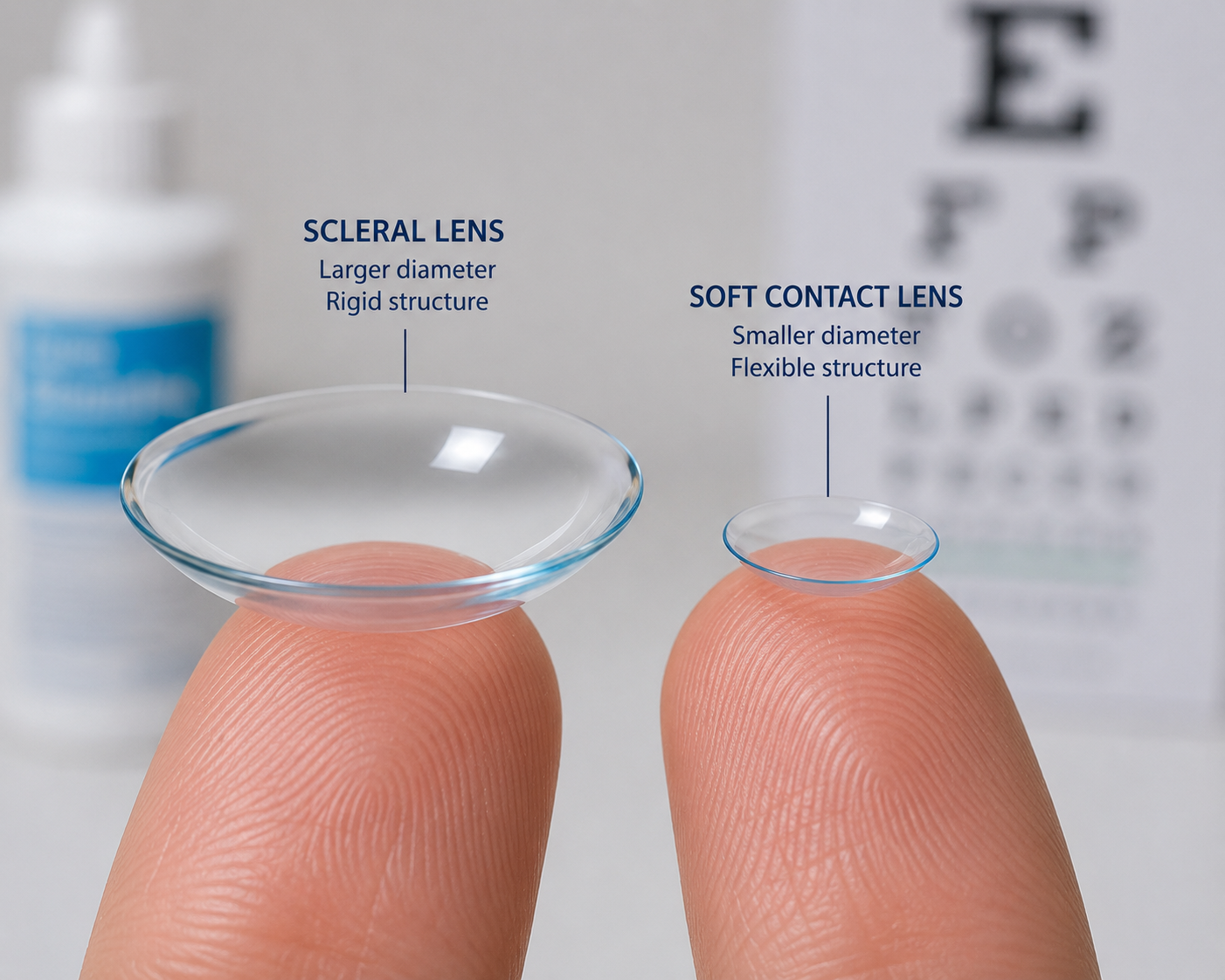
Scleral lenses are large-diameter rigid gas-permeable lenses that vault entirely over the cornea and rest on the sclera, the white part of your eye. Unlike standard soft lenses or even traditional rigid gas-permeable lenses, they create a fluid reservoir between the lens and the corneal surface. That reservoir is filled with preservative-free saline before insertion, giving the cornea constant lubrication throughout the day.
This design makes scleral lenses exceptionally effective for complex or irregular corneas. According to the American Academy of Optometry, scleral lenses are now considered a frontline option for conditions that standard lenses cannot adequately address. But that fluid vault also makes the fitting process significantly more technical, and you can learn more about our approach by visiting our services page. The lens must be precisely mapped to your eye's unique topography, and small errors in sagittal depth or landing zone alignment can cause blurred vision, discomfort, corneal hypoxia, or worse.
Eye Conditions That Require a Specialist-Level Fit
Scleral lenses are most frequently prescribed for patients whose corneas fall outside the range that standard lenses can accommodate. These include:
Keratoconus: Progressive corneal thinning and bulging that distorts vision and makes soft lenses unstable.
Post-LASIK complications: Irregular ablation zones, ectasia, or persistent dry eye after refractive surgery.
Severe dry eye disease: The saline reservoir acts as a continuous moisture barrier, bypassing the ocular surface entirely.
Corneal scarring: From infections, injuries, or prior surgeries.
High or irregular astigmatism: When a toric soft lens or spectacle correction can't deliver crisp acuity.
The National Eye Institute notes that keratoconus affects roughly 1 in 2,000 Americans, and scleral lenses are often the most effective non-surgical management option. For many of these patients, the stakes of a poor fit are high: failed lens attempts don't just cause frustration; they can increase patient anxiety and permanently damage trust in the fitting process, which is why we prioritize expertise and careful monitoring at our home practice.
What Separates an Experienced Fitter From a General Prescriber
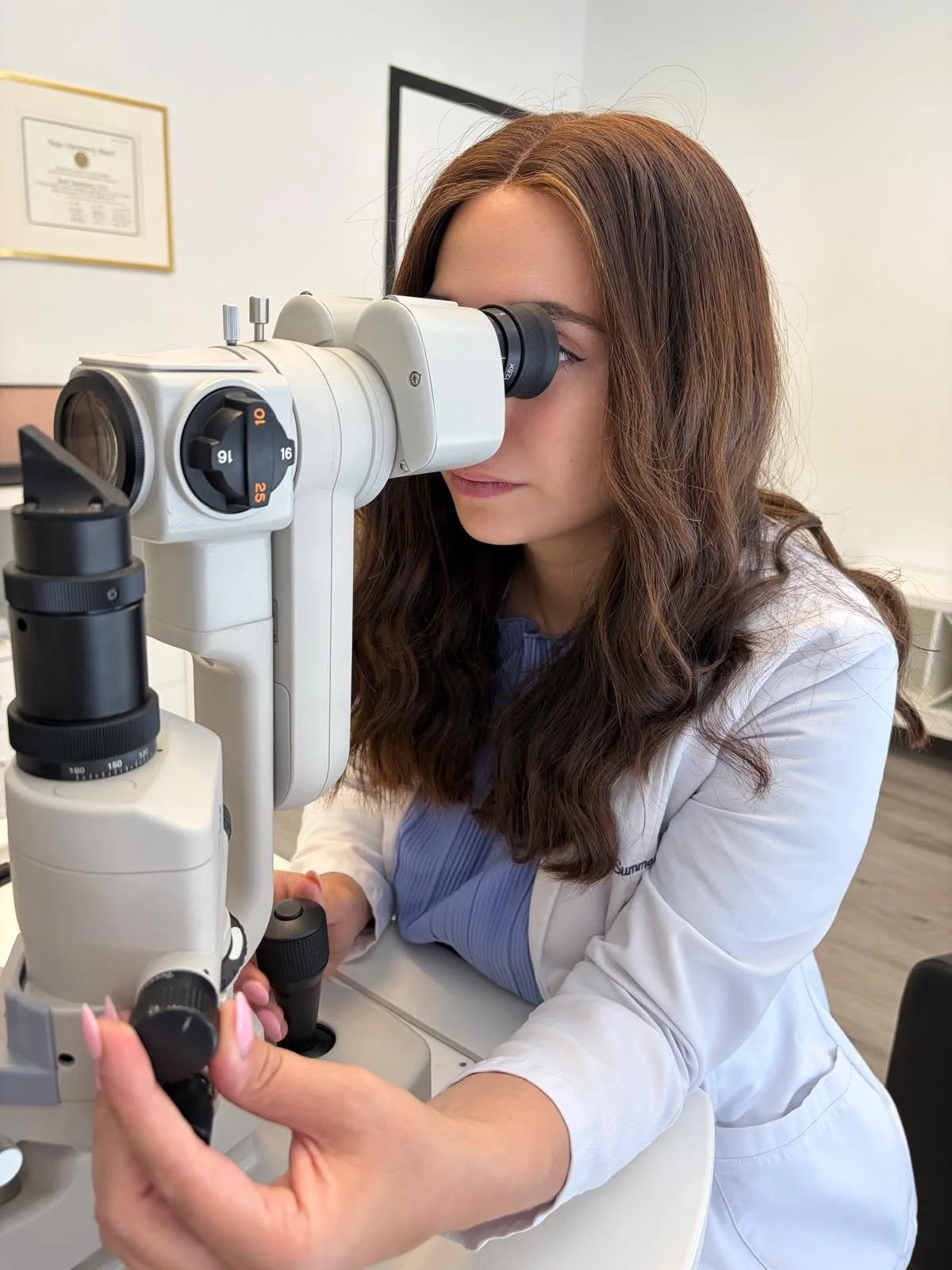
Experienced fitters don't just have more hours logged. They use a fundamentally different clinical approach, one that you can understand better by reading about our meet the doctor credentials and background. They assess sagittal depth, not just base curve, as the primary fitting parameter. They use slit lamp techniques to evaluate central clearance in real time. They monitor for microbial keratitis, hypoxic complications, and conjunctival compression at every follow-up visit. This systematic approach, applied consistently across dozens or hundreds of patients, is what makes the difference between a frustrating multi-month fitting process and one that reaches a successful outcome in three to four visits.
The Real Benefits Patients See With the Right Fitter
Over 80% of post-surgical patients experience improved vision and comfort with scleral lenses when properly fitted, according to clinical data. But comfort and clarity aren't the only benefits worth noting.
Because scleral lenses rest on the sclera rather than the cornea, they provide:
Stable, consistent visual acuity throughout the day, even on irregular corneal surfaces.
All-day moisture for patients with severe dry eye who can't tolerate any lens that contacts the corneal surface.
Protection for fragile or compromised corneas from environmental irritants.
Customization at a level that soft lenses and glasses simply cannot match. Each lens is mapped to your specific ocular geometry.
The Mayo Clinic recognizes scleral contact lenses as an effective management option for keratoconus and other corneal irregularities, particularly when surgical options aren't appropriate or preferred.
These benefits only materialize, however, when the lens is correctly fitted. Patients who receive an inappropriate initial lens, or who aren't properly monitored through the adaptation period, are significantly more likely to abandon lens wear altogether, citing discomfort and the perception that the fitter doesn't know how to make the lenses work, which is why we emphasize thorough follow-up care and recommend reading our blog for guidance on maintaining your lenses.
Source: Mushtaq A, Alvi I. Long-Term Effectiveness of Scleral Lens Treatment in the Management of Keratoconus: A Systematic Review. Cureus. 2025;17(1):e77102.
Why Texas Contact Lens Institute Is the Right Choice in North Texas
Texas Contact Lens Institute, located at 6020 W Parker Rd Suite 260 in Plano, TX, specializes exclusively in the kind of complex, precision fitting work that scleral lenses demand. Their services include scleral lens fitting, keratoconus management, orthokeratology, myopia management, dry eye treatment, and a full range of specialty contact lens options.
You can browse their full list of services to understand the scope of specialty care available, or visit our practice to get a quick overview of how we approach these complex cases through our referrals page for established practitioners and patients coming from other providers. If you want to know more about the clinician behind the fits, the meet the doctor page outlines their qualifications and clinical background directly. Practitioners and referring clinicians can also submit patient information through our patient referral system, which streamlines the process for patients coming from other providers.
Getting scleral fitting right requires dedicated training, proper instrumentation like corneal topographers and anterior segment OCT, and enough case volume to develop the kind of clinical intuition that textbooks alone can't teach. The materials at Texas Contact Lens Institute also publish practical information for patients navigating complex lens options, and you can reach the practice directly through the contact page to schedule a fitting consultation.
Things to Know
Scleral lens fittings typically require multiple visits. A practitioner averages 3.8 visits per fitting, not one or two appointments.
Source: Harthan JS, Nau CB, Barr J, et al. Scleral lens prescription and management practices: Emerging consensus. Cont Lens Anterior Eye. 2021.
Insurance coverage for scleral lenses varies significantly. Conditions like keratoconus are more likely to receive coverage under medical insurance rather than vision plans. Always verify with your carrier before your first appointment.
Maintenance matters. Scleral lenses require a specific cleaning and insertion routine. Your fitter should walk you through this in detail. If they don't, that's a red flag.
Not everyone is a candidate. Patients with certain eyelid anatomies, severe glaucoma, or specific corneal conditions may not achieve a stable fit. An experienced fitter will identify this early rather than after multiple failed attempts.
The Contact Lens Institute and similar professional organizations offer continuing education specifically for scleral lens fitting — look for practitioners who actively pursue this training.
Frequently Asked Questions
Q: How many visits does a scleral lens fitting typically take?
Most patients complete their fitting process in three to five visits with an experienced practitioner.
Published survey data reports an average of 3.8 visits and 2.4 lenses ordered across the fitting process. Practitioner experience matters: research tracking a single fitter's first 156 fittings found that the number of trial lenses and reorders both dropped measurably as experience accumulated.
Q: Can scleral lenses fix dry eye completely?
Scleral lenses manage dry eye symptoms very effectively but don't treat the underlying cause.
The saline reservoir separates the lens from the corneal surface, providing continuous lubrication and relief for many patients with moderate to severe dry eye. For best results, scleral lens wear is often combined with other dry eye treatments.
Q: What's the difference between scleral lenses and RGP lenses?
Scleral lenses are larger, vault the entire cornea, and are generally more comfortable for irregular corneas than traditional RGP lenses.
RGP lenses sit directly on the cornea and can be unstable or uncomfortable on irregular surfaces. Scleral lenses bypass the cornea entirely, making them better suited for keratoconus, post-surgical eyes, and severe dry eye cases.
Q: How do I know if my fitter has enough experience with scleral lenses?
Ask directly how many scleral lens fittings they have completed and what technology they use during the process.
Experienced fitters should be comfortable discussing their clinical methodology and monitor for complications. Vague answers or an inability to describe their fitting approach are signs to look elsewhere.
The Bottom Line on Why Choose an Experienced Scleral Lens Fitter
The data is consistent and the stakes are real. Experienced scleral lens fitters deliver faster results, fewer failed lens attempts, better complication monitoring, and significantly higher patient satisfaction than general practitioners who fit scleral lenses only occasionally.
If you're in the Plano or North Texas area and dealing with keratoconus, dry eye, post-surgical vision problems, or any complex corneal condition, Texas Contact Lens Institute offers the specialized expertise this kind of fitting demands. Reach out, ask the right questions, and make sure you're getting care from someone who has built their practice around precision lens fitting, not just added it to a general optometry menu.
